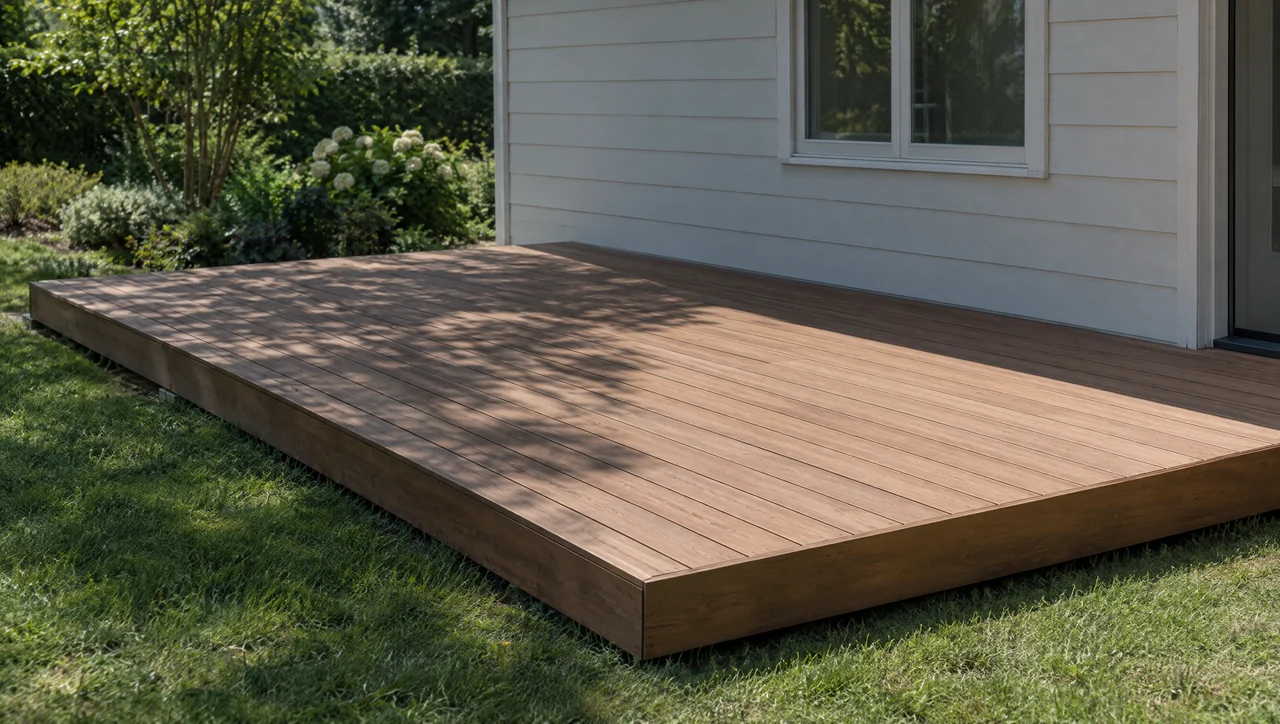
Keep the observation conditions
Record exact color, product, surface condition, shade or exposure, orientation, time and measurement method. Preserve differences between setups instead of treating unlike observations as comparable data. A sample observation can inform preference without establishing all-season behavior.
Keep heat and slip questions separate
Each claim needs its own evidence and conditions. Neither a temperature claim nor a slip result is a general safety guarantee. Do not improvise unsafe contact or slip tests. If the supporting method is missing, leave the rating unknown or expressly provisional and ask the source for the missing details.
Comfort includes more than temperature
How a deck feels underfoot depends on its surface, exposure and use. Heat is one question; texture, splinters, coatings, footwear and wet conditions are others. Define the setting before asking which material is most comfortable. A shaded morning observation does not describe a barefoot route in afternoon sun.
Compare the exact colors and finishes under consideration. A category label alone cannot establish the surface temperature of every product within it. Avoid universal temperature rankings that do not identify the samples, weather, exposure duration and measurement method.
Make an informal sample comparison fair
Place labeled samples together in comparable conditions. Keep their orientation and exposure similar, and record the time, weather and whether they are wet or dry. A sample that has just been moved out of storage is not comparable to one that has been in the sun for hours.
| Observation | Record alongside it |
|---|---|
| Surface temperature measurement | Instrument, method, time and sample exposure |
| Texture | Exact surface and direction of contact |
| Appearance of wear | Sample age and use history |
| Wet feel | Wetting condition and limits of the informal observation |
| Owner preference | Who observed it and the intended use |
Follow the instrument's instructions if measuring temperature. Different surfaces and measurement methods can complicate comparisons. Do not expose someone to a potentially hot surface to establish a comfort threshold, and do not turn a brief touch test into a safety rating.
Keep comfort observations separate from slip evidence
A surface that feels pleasant to a hand may behave differently under footwear or when wet. Informal observations help the owner articulate preferences; they do not establish a slip-resistance classification. Where performance evidence is required, obtain the relevant product test and review its conditions with the project team.
Think about where the owner will actually walk and sit. Shade, furniture layout and the route between a door and a pool can matter as much to daily use as the material comparison. Record those design choices rather than asking the board alone to solve every comfort concern.
Repeat the comparison if the color, finish or product line changes. Keep the labeled samples until the order is settled. The result should be a clear, limited conclusion—such as a preference among specified samples under recorded conditions—rather than an unsupported statement that an entire material category is always cooler or safer.
Read the baseline behind a cooler-deck claim
A temperature reduction describes a difference between two observations. Before adding it to a shortlist, identify both sides: the proposed product and color, and the comparison product and color. A reduction against an older board in another color does not establish the difference between the two candidates on your quotation. Keep the advertised maximum separate from a typical or guaranteed result.
For a concrete example, the Trex SunComfortable page and test footnote reviewed September 25, 2026 describes a laboratory comparison of Salt Flat with the technology against Lava Rock without it, under simulated summer sunlight. Its stated reduction is qualified by environmental conditions, color and use. That is a named comparison, not a test of every competing board or a prediction for your deck.
TimberTech’s decking disclaimers, reviewed on the same date, also qualify their cooler-touch statement: boards can still become hot in sun, and color matters. These manufacturer statements illustrate how to read a claim. They are not an independent ranking of the brands, wood, composite or PVC.
| Part of the claim | Question to resolve |
|---|---|
| Baseline | What exact board and color was the reference? |
| Claimed product | Does the tested line and color match this quote? |
| Number and unit | Is this a measured temperature, a temperature difference, or a percentage? |
| Exposure | Laboratory setup or field observation; what duration and conditions? |
| Qualifier | Maximum, average, range or guaranteed performance? |
| Decision limit | What does the evidence leave unknown for this location? |
Do not confuse a temperature with a temperature difference
A fictional report might show candidate A at 130°F and candidate B at 110°F in the same setup. The observed difference is 20°F. Converting that difference gives about 11.1°C; converting the two temperatures gives about 54.4°C and 43.3°C. These are two ways to describe the same observations. The numbers are an arithmetic example, not product data or a safe-contact limit.
Dividing the 20-degree difference by 130 and calling the result a percentage cooler is not a scale-independent comparison: the percentage changes if the same readings are written in Celsius. If a claim uses a percentage, ask what quantity and baseline were used. Keep its original units and definition rather than translating it into a preference rating yourself.
Even a clearly reported temperature difference does not establish barefoot comfort for every person, contact duration or weather condition. Record it as evidence about the tested setup. Leave the separate comfort decision and any project-specific safety requirements visible.
Turn a weak comparison into a precise supplier question
Suppose your shortlist contains a brown wood sample, a light composite and a dark PVC board. The composite brochure compares its lightest color with an unnamed dark reference; the PVC brochure supplies a category-wide headline; the wood supplier provides no measurement. There is no defensible numeric order for these three candidates from those documents. Missing evidence is not a zero-temperature result, and a missing rating should not silently become the lowest performance score.
- Ask each supplier for the exact line, color and surface represented by the claim.
- Request the baseline identity, method, exposure, units and relevant report or published qualification.
- State the actual project condition you need to assess—for example, an exposed afternoon walking route rather than a shaded seating area.
- If comparable evidence is unavailable, record the limitation and make any appearance preference separately. Reopen the comparison when the color or surface treatment changes.
A useful request reads: “Our quoted candidate is line X, color Y. Does your cited heat comparison include that configuration? Please identify the reference board, test conditions and limits of applying the result to our exposed deck.” The answer belongs with that candidate in the decision workspace, not as a permanent rating for its entire material family.
A change in decking priorities
One brochure reports a surface temperature without naming the comparison color. The worksheet marks the claim incomplete instead of treating it as a five-point comfort score.
Hypothetical planning example.
Technical context
ASTM’s public scope includes temperature effects, but that scope is not a universal barefoot-comfort ranking or a temperature limit.
ASTM D7032-21: Public scope