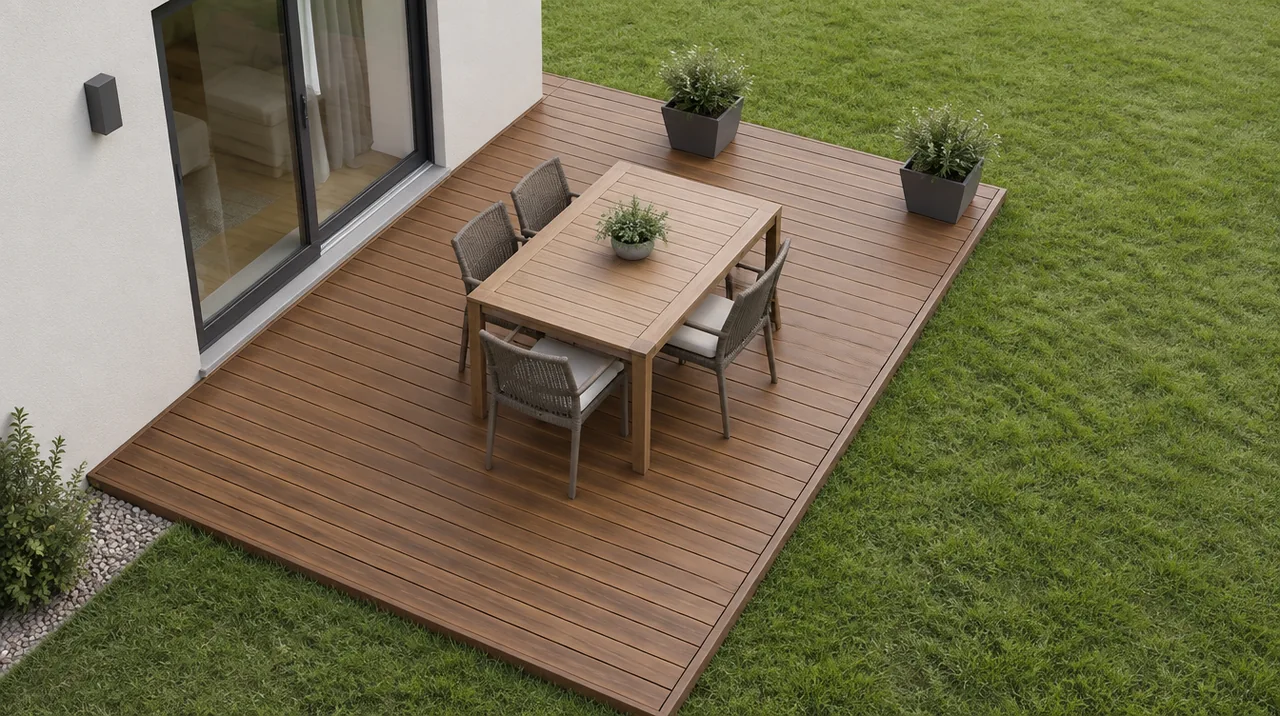
Define the appearance target
Write down which changes the owner accepts. A preference for natural color change differs from a preference for maintained color. Compare the actual care instructions against that same brief. Accepting a changing appearance does not remove inspection or cleaning obligations.
Create a task record
For each task, record method, access, consumables, interruption and responsible person. Leave labor time and frequency unresolved until an applicable instruction or clearly labeled planning assumption is available. Include setup and moving furniture where relevant. Ask how damaged individual boards can be replaced within the proposed assembly.
Compare tasks the owner will actually undertake
Replace vague labels such as easy care with a list of actions: inspection, cleaning, finish renewal where intended, local repair and replacement access. Identify who performs them, what access is needed and what the selected product instructions say.
Separate an appearance choice from a necessary repair. An owner may accept naturally weathered wood while still needing cleaning and condition checks. A manufactured product may avoid a particular finish routine without eliminating every maintenance task.
Compare the operating burden
| Task | Question to compare |
|---|---|
| Cleaning | Which documented method and products apply? |
| Appearance renewal | Is it part of the owner’s chosen appearance goal? |
| Inspection | What conditions should be brought to qualified review? |
| Local repair | Can one board be reached and replaced? |
| Access | What setup or closure is involved? |
For a small rooftop, difficult access may matter more than the material’s simple care description. Record setup and access separately from time spent on the surface. Do not assume that every task has the same frequency across products.
Use documented requirements and the owner’s actual preferences. If costs or intervals are assumptions, label them and compare alternative scenarios instead of presenting a universal winner.
A worked comparison: the same deck, different care commitments
Consider a fictional owner choosing between two otherwise acceptable candidates for a furnished terrace. The owner wants to keep the terrace usable and is willing to clean it, but has limited time to clear furniture. Candidate A is being considered with a maintained-color finish. Candidate B is being considered with an appearance the owner accepts without that finish routine. Those are the proposed care strategies for this example, not universal rules for wood or manufactured decking.
| Question | Candidate A record | Candidate B record |
|---|---|---|
| Appearance brief | Owner wants to retain the selected finish appearance | Owner accepts the proposed surface and its documented changes |
| Care evidence | Current board and selected finish instructions are both needed | Current product cleaning and care instructions are needed |
| Access burden | Confirm which finish tasks require clearing the full working area | Confirm the access needed for the documented cleaning method |
| Task frequency | Unresolved until the applicable instructions and condition basis are reviewed | Unresolved until the applicable instructions and condition basis are reviewed |
| Local damage | Ask how one board can be reached, removed and reinstated | Ask the same question; do not infer easy replacement from the care label |
| Selection consequence | Decide whether the owner accepts the documented finish work | Decide whether the owner accepts the appearance and remaining care work |
The owner may prefer B’s proposed appearance strategy if its documented care and repair requirements fit the available access. A missing cleaning instruction or replacement detail is still an open question. A preference for less finish work does not resolve it.
If A remains preferred, record how the work will be done: which furniture must move, where it can go, whether the route to the house stays usable and who will perform the task. Those details can change the practical burden even when two instructions describe the same surface operation. Confirm closure and return-to-use conditions from the applicable product documents; do not invent a generic drying period.
Carry the comparison into the shortlist
Choose a care-routine score only after writing the reason. “The owner accepts the documented cleaning method and has access to carry it out” is more useful than “low maintenance: 5.” If the owner rejects a documented task, say which task and why. If the instructions are missing, keep the judgment unknown or clearly provisional.
- Attach the exact board and care-document identities to the candidate.
- Separate optional appearance work from required product care and unresolved repair questions.
- Record setup, access, interruption and responsible person alongside the surface task.
- Revisit the preference when the finish strategy, product or owner’s capacity changes.
Use the decision workspace to record that preference and its source basis. For a time-and-cost ownership scenario, continue to Deck Lifecycle; for choosing and documenting a maintenance intervention, use Deck Maintenance & Restoration. Keep the candidate-comparison record with you when reviewing that next decision.
A change in decking priorities
Two products fit the installation requirements. The owner compares their documented care tasks and accepts a different appearance outcome rather than relying on a maintenance-free slogan.
Hypothetical planning example.
Technical context
USDA finish guidance includes appearance and cleanability. It does not establish a fixed care interval for every exposed deck.
USDA Forest Products Laboratory: Finishing Wood